


Published on November 27, 2026
–
Updated on November 27, 2026
Dates
on the January 14, 2027
11h00
Location
Institut de Physique de Nice
Salle des séminaires
Salle des séminaires
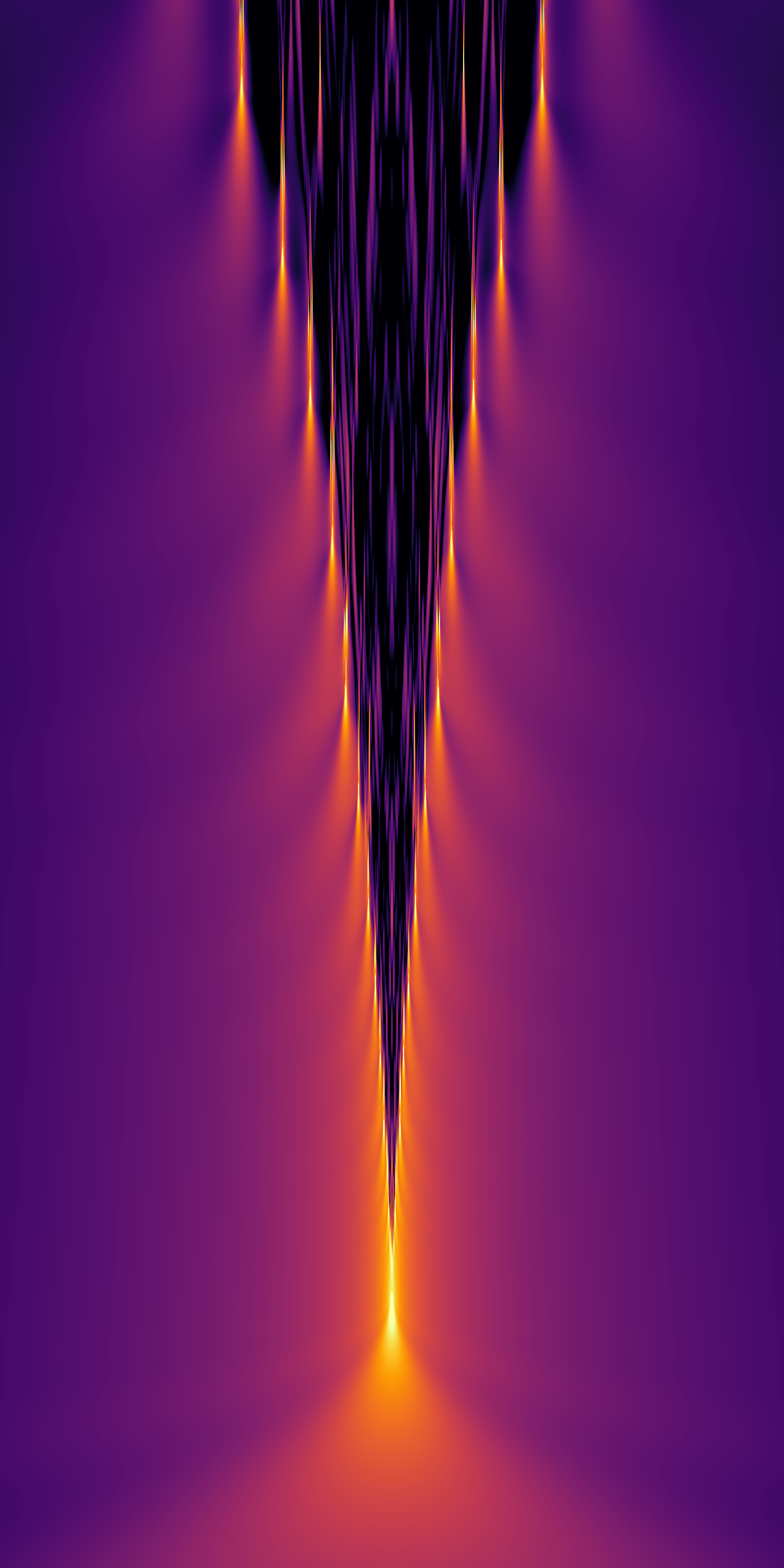
When the butterfly vanishes, does the storm remain? Spontaneous stochasticity in collapsing waves
Fluid seminars
Abstract:
The inviscid limit of fluid models, in which viscosity is sent to zero, is central to our understanding of turbulence. Among its many striking features, two stem directly from the roughness that solutions develop as viscosity vanishes. The first, anomalous dissipation, is a breakdown of conservation laws. Quantities that the ideal equations conserve, such as energy, are still dissipated at a finite rate, however small the viscosity. The second, spontaneous stochasticity, is a breakdown of determinism. Randomness survives in the limit even though the noise that seeds it vanishes. This is a more radical loss of predictability than chaos.
I will discuss both phenomena outside of fluids, in a focusing nonlinear Schrödinger-type equation where waves self-focus and collapse in finite time. As the small-scale physics that arrest each collapse (dissipation, or saturation of the nonlinearity) is made weaker, collapses multiply. Each one is negligible on its own but together, they can drain a finite amount of the wave's mass, and they leave the evolution after the first collapse undetermined, so that a deterministic equation acquires a truly random evolution in the limit.
I will close with an open question. Could this loss of determinism be observed in nonlinear optics experiments, where the self-focusing and collapse of light beams are classic phenomena?